
Hydrogen is attracting serious investment as a decarbonisation route, and one of the quickest ways to deploy it is blending it into existing natural gas pipelines. But hydrogen and natural gas are physically very different gases, and even modest blends change how pipelines — and everything burning the gas — behave. If you operate gas engines, turbines or any fuel-driven equipment, it is worth understanding the basics.
Lower Energy Delivered per Cubic Metre
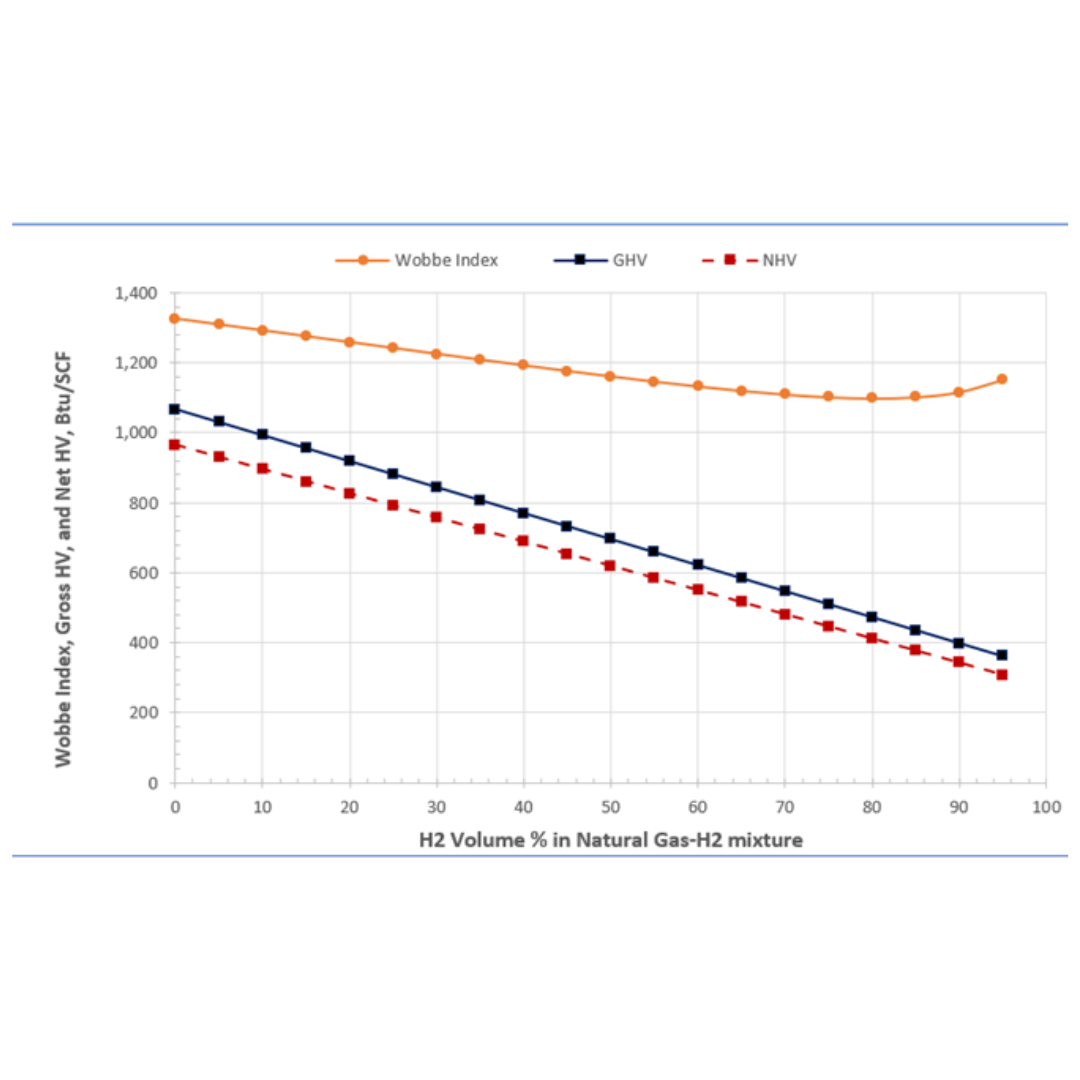
Hydrogen carries only about 30% of the heating value of methane per unit volume. Blend hydrogen into pipeline gas and every cubic metre delivered carries less energy, which effectively reduces the energy capacity of the pipeline and forces end users to move more gas for the same output.
Faster Flames and Different Combustion
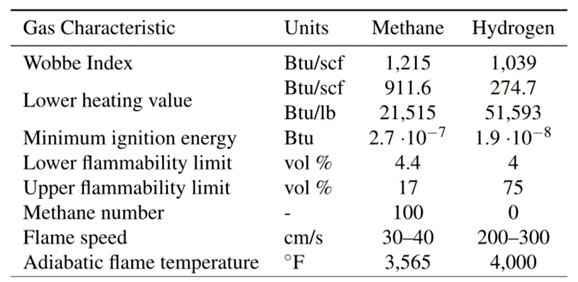
Hydrogen burns roughly seven times faster than methane, has a much wider flammability range (about 4–75% concentration in air) and needs far less energy to ignite. Flame temperature also rises with hydrogen content, which can push nitrogen oxide (NOx) emissions up in burners and engines. Pure hydrogen flames are nearly invisible — an added safety consideration on any plant.
The Wobbe Index and Fuel Interchangeability

Engineers track fuel interchangeability with the Wobbe Index. As hydrogen is blended in, the index falls gradually until around 85% hydrogen content, then rises again. Equipment tuned for natural gas may stay within tolerance at low blends but drift outside it as concentrations grow — affecting gas engines, turbines, boilers and even the compressor drivers on the pipeline itself.
What This Means for Operators
Small composition shifts already cause real issues: metering inaccuracies, capacity bottlenecks and equipment that needs re-tuning. As blends increase, gas-fired equipment will increasingly need design review or modification to run safely and efficiently. That makes fuel flexibility something to plan for rather than discover.
Reliable Power Through the Transition
While gas networks experiment with hydrogen, diesel-driven power remains the dependable workhorse for critical loads — and hybrid gas/diesel planning is becoming common on forward-looking sites. Feblet Technologies supplies British-designed generators with Perkins, Cummins and Volvo engines plus genuine parts, internationally delivered. Speak with our team about power equipment that keeps your options open.